


A CRA notice does not have to announce an audit to deserve attention. Send your tax professional any correspondence that changes an assessment, requests information, identifies an unpaid balance or sets a deadline. Routine notices of assessment matter too, even when the amount owing is zero.
For business owners in Oakville and across the GTA, the challenge is often deciding whether a letter is informational or requires action. A payroll discrepancy, GST/HST adjustment or request for receipts can affect more than the return originally filed.
The safest approach is to forward relevant correspondence promptly, with all pages attached, rather than waiting until year-end. If your accountant already receives notices through authorized access, agree on who monitors them and who responds. Access alone does not establish responsibility.
Which CRA notices should you send to your tax professional?
Forward notices for every tax account and reporting period covered by your engagement. Include notices that appear correct, not just ones you disagree with. They help confirm what the CRA processed and whether your records match.
| CRA correspondence | Why it matters | What to send with it |
|---|---|---|
| Notice of assessment | Confirms how the CRA assessed a filed return | Complete notice and any unexplained differences |
| Notice of reassessment | Changes a previous assessment | Prior notice and records related to the change |
| Review letter or information request | Requests support for specific return items | Full request, reference number and available supporting records |
| Audit correspondence | Identifies an examination, document request or proposed adjustment | All pages, attachments and earlier exchanges |
| GST/HST or payroll notice | May identify filing gaps, adjustments or remittance differences | Relevant returns, payroll summaries and payment records |
| Instalment reminder or account statement | Helps check payments, credits and upcoming obligations | Payment confirmations and your instalment schedule |
| Collections or demand correspondence | May require immediate attention to enforcement or filing obligations | Full notice and details of recent payments or arrangements |
Include related personal notices when your accountant also handles your personal taxes. For an owner-manager, personal and corporate issues can overlap, but the accounts and obligations remain separate.
Prioritize deadlines, not just dollar amounts
A request for documents can be more urgent than a large balance shown on a routine statement. Your tax professional needs to see the response date, the tax account involved and what the CRA is asking you to do.
As a practical workflow, flag collections correspondence, demands to file and notices with an approaching deadline immediately. Send other notices promptly enough to allow time for review, document gathering and a response. These are workflow recommendations, not additional CRA deadlines.
For many corporate income tax assessments and GST/HST assessments, the objection period is generally 90 days from the date the notice was sent. Personal income tax objections can follow different rules. Confirm the applicable deadline using the notice and the CRA’s objections and appeals guidance.
Do not assume that calling the CRA, submitting missing records or requesting an adjustment preserves objection rights. Similarly, asking for more time to answer a review letter does not itself grant an extension. Obtain confirmation of any revised response date.
If a deadline has already passed, send the notice anyway. Available remedies depend on the circumstances and applicable rules, so delaying further rarely helps.
Read assessment changes before assuming they are correct
A notice of assessment records the CRA’s assessment of a return. A notice of reassessment changes an earlier assessment. Neither should be treated as proof that every underlying issue has been resolved permanently.
Ask your tax professional to compare the assessed results with the filed return and explain material differences. Useful items to check include taxable income, tax payable, credits, losses, interest and penalties. The explanation-of-changes section may identify what happened, but supporting records may still be needed to understand why.
For example, a corporation might receive a reassessment reducing a claimed expense. The next step depends on whether the difference arose from missing documentation, an error in the return or a disagreement about the tax treatment. Those situations do not necessarily call for the same response.
A review letter is also different from a reassessment. It may ask for evidence before the CRA decides whether a change is needed. An audit proposal may invite representations before a reassessment is issued. Forwarding correspondence at that earlier stage gives your adviser time to assess the issue and prepare a supported response.
Keep the original notice even after the matter is resolved. It forms part of the record explaining the final tax position.
Send instalment reminders and payment discrepancies too
An instalment reminder is not the same as an assessment of a newly filed return. It can still affect payment planning and potential interest exposure.
Your tax professional should compare the reminder with the applicable calculation method, amounts already paid and changes in expected income. A business with a weaker year should not simply stop paying instalments without checking the consequences. A growing business should not assume that last year’s payment schedule will always be sufficient either.
Understanding how corporate tax instalments are calculated can help you discuss the reminder without confusing estimated payments with the final year-end liability.
When a statement shows an unexpected balance, attach payment confirmations showing the date, amount and intended account. A payment may need to be traced or transferred between accounts. Confirm the posting before making a duplicate payment or concluding that the CRA’s balance is wrong.
Build a complete document package
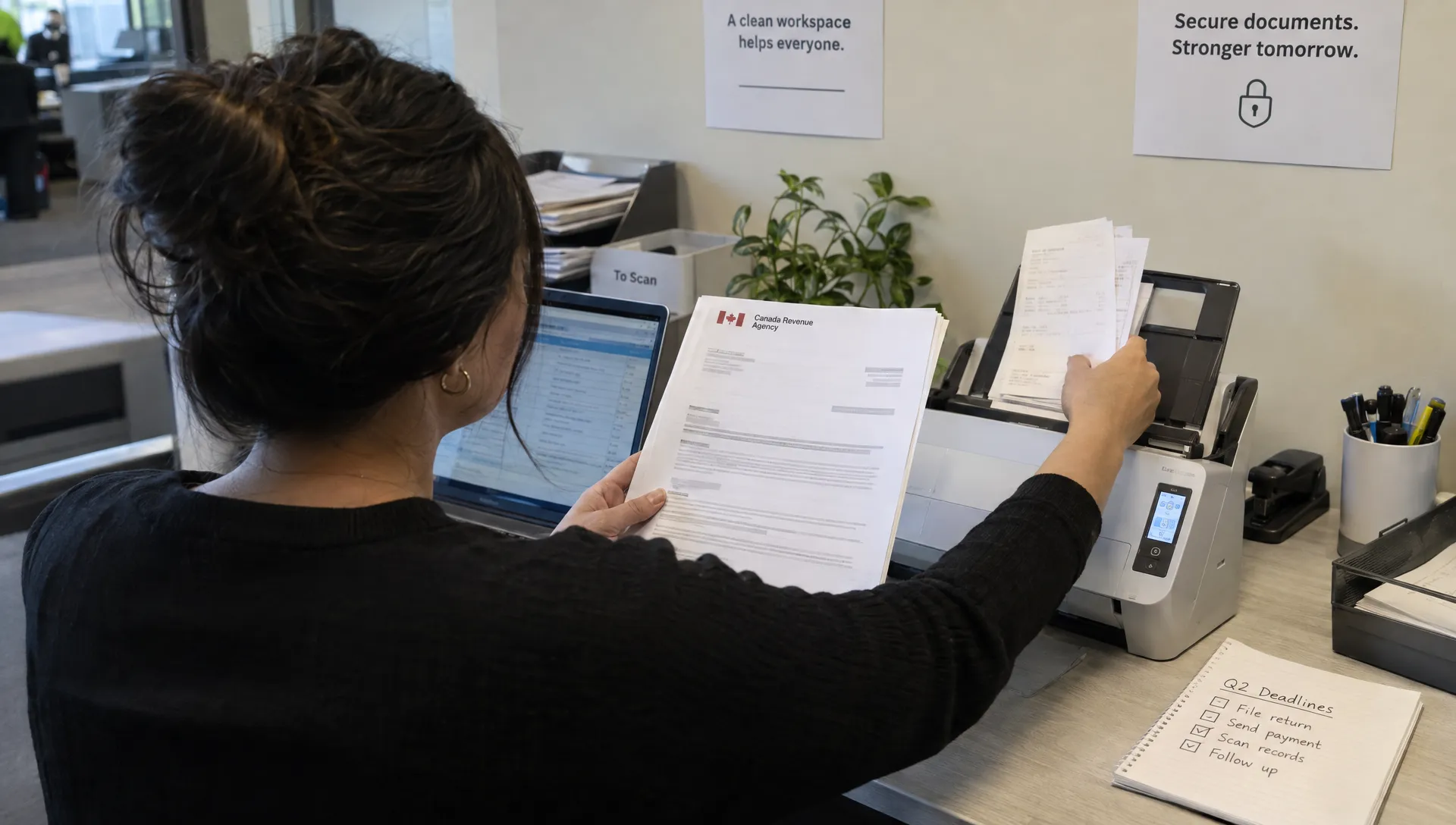
A cropped screenshot of the balance owing usually leaves out the information needed to act. Download the full notice from your CRA account or scan every page of the paper version, including relevant attachments.
Include a short cover message with the following details:
- Account and period: Identify the legal entity, tax account type and tax year or reporting period.
- Dates: State the notice date, when you received or accessed it and any response deadline shown.
- Issue: Explain what appears unexpected or what you need help understanding.
- Supporting records: Attach relevant receipts, reconciliations, returns, payment confirmations or earlier correspondence.
- Actions already taken: Describe any calls, submissions, payments or arrangements, including reference numbers where available.
Keep the message factual. If you are unsure whether an amount was paid, say so rather than guessing. If records are missing, identify the gap so the response can be planned around it.
Use filenames that distinguish entities, periods and notice types, such as “CompanyName_GSTHST_2026Q2_ReviewLetter.pdf”. Keep a copy of the documents submitted and any confirmation of receipt. A clear record is especially useful when several requests concern the same reporting period.
Confirm who is authorized and responsible for responding
Sending a document does not automatically authorize someone to discuss your account with the CRA. Your tax professional may need appropriate representative access before obtaining information or acting on your behalf.
Ask whether the authorization covers the correct entity and program accounts. Corporate income tax, GST/HST and payroll matters may involve different records and access needs. Never provide your CRA password or multi-factor authentication code as a substitute for proper authorization.
Also confirm the service scope. Preparing a return does not necessarily include monitoring notices, answering review letters, handling an audit or filing an objection. A useful tax engagement letter sets out responsibilities and service boundaries, helping prevent each party from assuming the other is managing a deadline.
Before a response is submitted, agree on who gathers evidence, who approves the explanation and who confirms delivery. If you contact the CRA yourself, pass along the date, reference number and substance of the discussion so the file remains consistent.
Verify the sender before sharing financial information
An unexpected message demanding payment or documents should be verified before you follow its instructions. Do not rely only on a sender name, logo or urgent wording.
Access your CRA account through a trusted route rather than a link in an unexpected message. If you are uncertain about a call or letter, use independently obtained contact information and consult the CRA’s fraud-prevention guidance. An email notification that correspondence is available is not a substitute for opening and reviewing the actual document.
Once verified, share sensitive records with your tax professional through an agreed secure method. Avoid placing social insurance numbers, full account identifiers or detailed financial records in an ordinary email subject line. Ask how documents should be transferred if no process has been established.
Technology businesses should also check what the acronym means. The EU’s Cyber Resilience Act reporting requirements concern actively exploited vulnerabilities and severe product-security incidents, not Canada Revenue Agency tax notices. Route that correspondence to the people responsible for product security and legal compliance rather than treating it as a Canadian tax filing matter.
Frequently asked questions
Should I send a notice if the CRA says I owe nothing? Yes, if it relates to a return or account your accountant handles. It can confirm assessed results, record changes or identify information relevant to future filings. A zero balance does not mean the notice has no recordkeeping value.
Does my accountant automatically receive every CRA notice? Do not assume so. Receipt and access depend on authorization, account settings and the correspondence involved. Agree with your tax professional on who checks each account and how notices are acknowledged, especially during absences or changes in staff.
Is a request for receipts the same as an audit? Not necessarily. A review may focus on selected claims or supporting documents without being a broader audit. Either way, read the request carefully, preserve the records and respond within the applicable timeframe.
Should I pay an amount I disagree with? Obtain advice specific to the tax account and circumstances. Disputing an assessment does not automatically remove every payment or collection obligation, and interest may continue. Payment decisions and objection deadlines need to be considered separately.
Make CRA correspondence part of your accounting routine
Create one secure location for CRA notices and assign someone to check electronic and paper correspondence. Forward complete documents, flag deadlines and request confirmation of who will handle the next step.
If you need help understanding a notice or coordinating it with your business’s accounting and tax obligations, contact Reach Professional Accounting to discuss the issue and the scope of assistance needed. Bring the full notice, relevant records and a summary of anything already submitted or paid.