


Bookkeeping management should protect financial data, not just keep transactions organized. A business can have a balanced ledger while former employees still have access, supplier banking changes go unchecked or supporting documents disappear. Those weaknesses can expose payroll information, enable unauthorized payments and make reliable reporting harder.
For Oakville and GTA businesses, effective protection starts with five practical controls: restricted access, separated responsibilities, traceable changes, reconciliation and recoverable records. Each needs a named owner and evidence that it actually operates. Software can support the process, but it cannot replace someone checking exceptions and following through.
1. Restrict access to named users
Give each employee and external bookkeeper an individual account. Shared logins make it difficult to determine who changed a supplier record, downloaded payroll information or posted a journal entry. They also complicate access removal when someone leaves.
Apply least-privilege access, meaning people receive only the permissions their work requires. Someone entering bills may need access to invoices without needing authority to release payments. A manager reviewing results may need reports rather than full administrator rights. Keep payroll and employee banking information restricted to those who need it.
Enable multi-factor authentication wherever supported, particularly for accounting software, banking, payroll and the email accounts used to reset passwords. Use approved bank-feed connections rather than sharing online banking credentials with colleagues or service providers.
An access register makes bookkeeping management easier to supervise. Record each user’s role, permission level, approving manager and last review date. Review it regularly and whenever a person changes roles or leaves. Disable unnecessary access promptly, including connected applications and sessions where the platform allows it.
For example, a temporary bookkeeper hired to clear a backlog should not retain administrator access after the assignment ends. The control is complete only when someone checks that access was actually removed, not when the termination email was sent.
2. Separate payment approval from recordkeeping
Avoid giving one person unrestricted control over supplier creation, invoice entry, payment approval and reconciliation. Combining those responsibilities allows an error or improper payment to move through the entire process without independent scrutiny.
A practical arrangement has the bookkeeper prepare a payment batch, an authorized manager compare it with supporting invoices and an independent reviewer examine the resulting bank activity. Set approval limits that reflect your business’s transaction sizes and risk. Small payments still need scrutiny when they involve unusual suppliers or changed banking details.
Supplier banking changes deserve independent verification. Confirm new instructions using a previously verified contact method, such as a telephone number already held in your records. Calling the number supplied in a suspicious email does not provide an independent check. Keep evidence of who verified the change and who approved it.
Small teams can strengthen bookkeeping management through an owner review when full separation is impractical. The owner should examine bank activity directly, inspect new suppliers and challenge unusual payments. An approval stamp without examining the underlying records provides little protection.
For a broader view of how control weaknesses affect financial reporting, Reach Professional explains how audit and accounting firms assess fraud risks. The same risk-based thinking helps owners decide which transactions need closer oversight.
3. Make bookkeeping management changes traceable
Every material entry should have a clear path back to supporting evidence. Attach or securely link invoices, receipts, contracts and approvals to the relevant transaction. A bank-feed description alone may not establish the business purpose, applicable tax treatment or authorization.
Use consistent document names and a controlled filing location rather than leaving records scattered across personal inboxes. Sensitive payroll documents need tighter access than ordinary supplier invoices. Avoid copying confidential information into broadly shared folders simply because doing so is convenient.
Enable audit-history features where available and confirm what the system actually records. Depending on the platform, the history may show who created, edited or deleted an entry and when. Do not assume that every connected application captures the same detail or that logs remain available indefinitely.
After reconciliations and review are complete, restrict changes to closed accounting periods where supported. A legitimate correction should follow a documented process, with an explanation and approval appropriate to its significance. Never use period locks as a reason to leave a known error unresolved.
For example, if a supplier invoice changes after payment, a reviewer should be able to compare the original document, the revised entry and the reason for the adjustment. Periodically test that chain on a few transactions. A collection of attachments is useful only when the records remain readable, accessible and connected to the correct entry.
4. Reconcile accounts and investigate exceptions
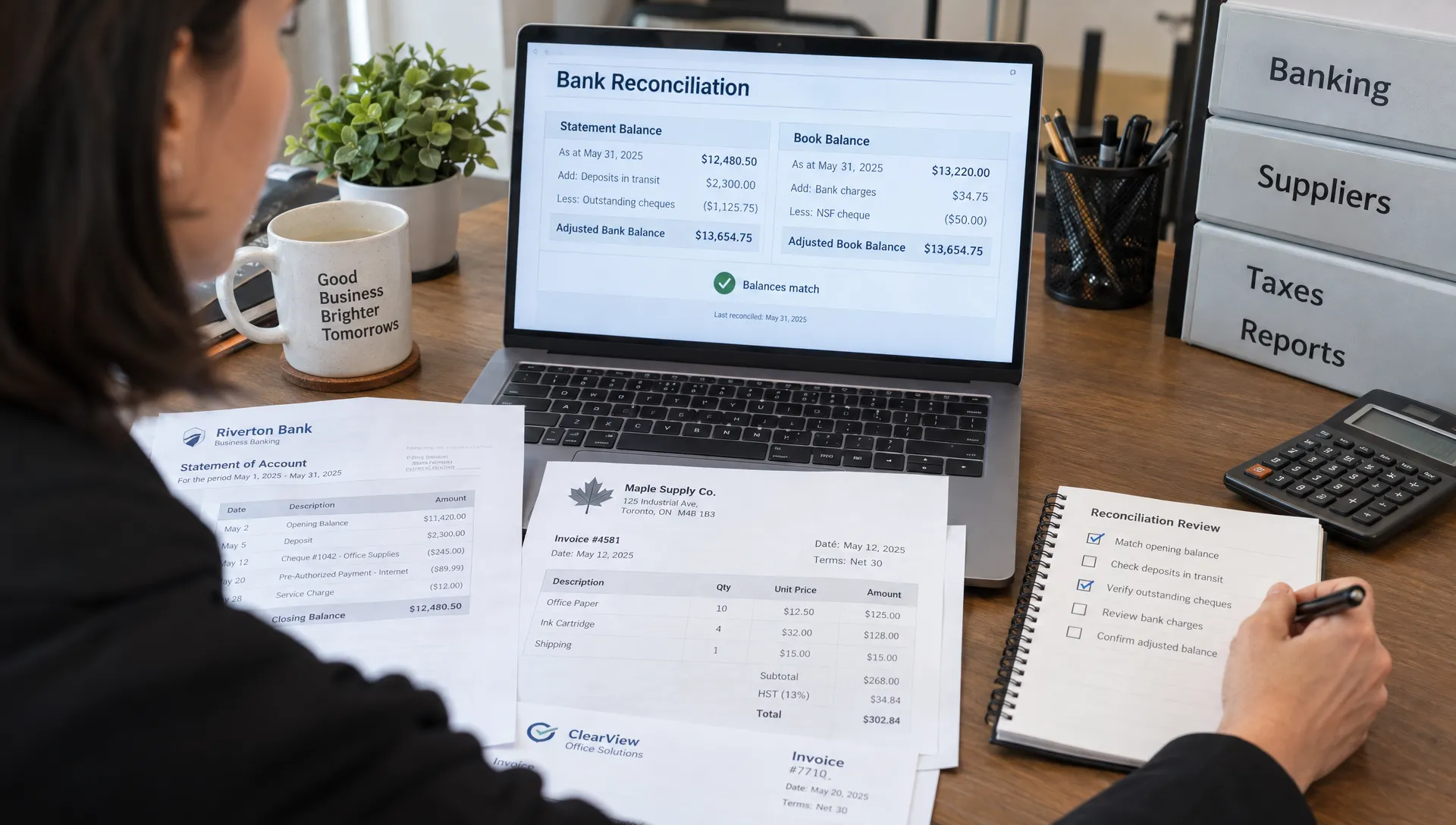
Reconciliation is a detective control within bookkeeping management: it compares independently sourced records to identify missing, duplicated or altered transactions. A bank feed imports information, but importing is not the same as checking completeness and accuracy.
Reconcile bank and credit card accounts to statements regularly. Monthly reconciliation is a practical baseline for many businesses, while high-volume or higher-risk activity may warrant more frequent checks. Review payroll clearing accounts, payment processors and other accounts where balances can accumulate unnoticed.
For card receipts, reconcile the processor’s settlement details to both customer transactions and bank deposits. A net deposit may combine sales, fees, refunds and chargebacks. Recording the deposit as a single sales amount can hide differences and weaken the supporting record.
For a travel-industry example, Elia’s French-language guide to online card-payment controls connects payer verification, booking records and bank reconciliation. Matching the payer, underlying transaction and settlement helps explain receipts that would otherwise be difficult to trace.
Keep an exception log with the amount, discovery date, responsible person and resolution. Do not clear unexplained differences through miscellaneous expenses merely to force a balance. Escalate unfamiliar payees, unexpected refunds and repeated small discrepancies, particularly when they involve the same user or supplier.
Have someone other than the preparer review significant outstanding items where possible. The reviewer should inspect supporting evidence and ageing, not simply confirm that the reconciliation report displays a zero difference.
5. Protect retained records and test recovery
Financial data needs to remain available after accidental deletion, equipment failure or a compromised account. Understand what your accounting provider can restore, how far back recovery extends and whether restoring data also restores attachments and configuration settings. Cloud access alone does not answer those questions.
Where supported, maintain encrypted backups or secure exports appropriate to the system. Protect recovery copies from unauthorized alteration or deletion through the same account used for everyday bookkeeping. Include supporting documents, payroll records and relevant configuration information, not just summary reports.
Test recovery periodically in an isolated location. Open sample documents, compare restored balances with known records and record the outcome. A successful download is not proof that the business could resume work. Assign responsibility for the test and address missing files or unreadable formats before an incident occurs.
Recovery planning also supports bookkeeping management compliance. The Canada Revenue Agency’s record-keeping guidance generally requires records and supporting documents to be retained for six years from the end of the last tax year they relate to. Exceptions apply, including circumstances requiring longer retention, so check before destroying records.
Set a documented retention and disposal process rather than keeping everything indefinitely. If an account is compromised, preserve relevant evidence, restrict affected access and involve your IT provider promptly. Verify restored financial data before relying on it for payments, payroll or reporting.
Assign owners and keep evidence
The following is a suggested starting schedule, not a universal compliance standard. Adjust the frequency to transaction volume, staffing and the sensitivity of your records.
| Control | Suggested responsibility | Evidence to retain |
|---|---|---|
| User access | System administrator, with owner oversight | Access register and completed access-removal checks |
| Payment authorization | Authorized manager for each payment batch | Invoice approval and supplier-change verification |
| Traceable records | Bookkeeper, with a monthly close reviewer | Supporting documents, change explanations and close checklist |
| Reconciliation | Preparer and separate reviewer where feasible | Completed reconciliations and resolved exception log |
| Recovery | Designated records owner working with IT | Backup status, recovery-test results and retention schedule |
A bookkeeping management control is only reliable when someone performs it and exceptions lead to action. During the monthly close, select a few completed transactions and check whether the expected evidence exists. Missing approvals or recurring unexplained balances should trigger a process correction, not just another reminder.
Frequently asked questions
Can cloud accounting software provide all five controls automatically? No. Depending on the platform and subscription, software may support permissions, audit histories and period restrictions. People still need to approve access, verify supplier changes, investigate exceptions and test recovery. Confirm capabilities rather than assuming they are enabled.
Who is responsible when bookkeeping is outsourced? Agree responsibilities in writing. Identify who enters transactions, approves payments, reviews reconciliations and retains records. Outsourcing transaction processing should not leave business owners uncertain about who controls banking access or who follows up on unusual activity.
Should confidential financial documents be sent by email? Use an approved secure transfer method where available, especially for payroll and banking information. Check recipients, limit the information shared and avoid sending credentials alongside the documents they unlock. Once information is downloaded, access controls in the original accounting system no longer protect that copy.
Strengthen the process behind your records
If inconsistent records make bookkeeping management controls difficult to apply, Reach Professional’s bookkeeping services for Oakville and GTA businesses can support accounting-system setup, transaction recording and categorization. Bring your access register, latest reconciliations and close checklist to a discussion about your bookkeeping needs and where the process needs attention.